
SEO Optimization for Small Business – How to Get Found on Google in 2026
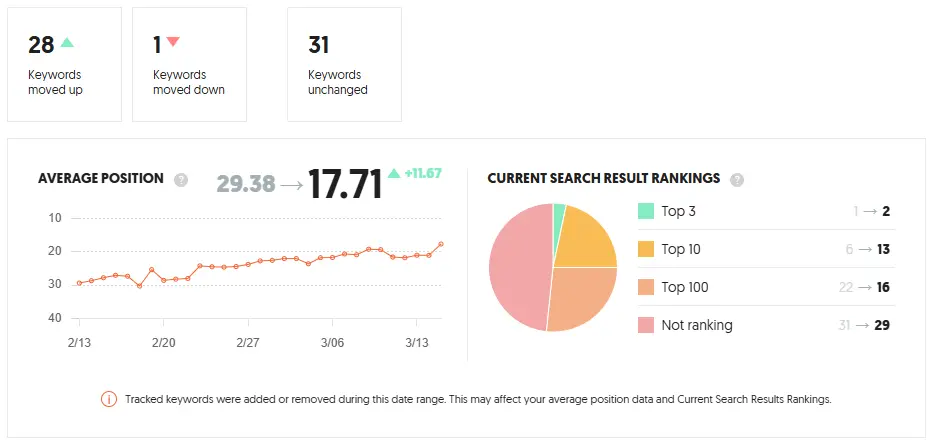
Every day, your potential clients are searching Google for exactly what you offer. The question is: do they find you, or do they find your competitors?
That's what SEO is about. Not just rankings. It's about making sure the right people find your business at the right moment, without you spending a dollar on ads.
In this guide, you'll get a clear, practical breakdown of how SEO optimization works for small businesses in 2026, what actually moves the needle, and what you can do today to start getting more clients from Google.
What Is SEO and Why Does It Matter for Small Businesses?
SEO (Search Engine Optimization) is the process of improving your website so that Google ranks it higher in search results for relevant queries.
When someone searches "web designer near me" or "how much does a website cost", Google decides which websites to show first. That decision is based on hundreds of factors, and SEO is the practice of optimizing those factors in your favor.
For small businesses, this matters enormously. Here's why:
- The first result on Google gets roughly 27% of all clicks
- The top 3 results share about 75% of total traffic
- Page 2 of Google receives less than 1% of clicks
If your website isn't on page one, it's practically invisible. SEO is how you change that.
How SEO Works: The Three Pillars
SEO can be broken down into three core areas. Every ranking factor Google uses falls into one of these:
| Pillar | What It Covers | Impact |
|---|---|---|
| On-Page SEO | Content, keywords, headings, meta tags | High |
| Technical SEO | Speed, mobile, crawlability, structure | High |
| Off-Page SEO | Backlinks, authority, reputation signals | High |
All three work together. A technically perfect site with no content won't rank. Great content on a slow, broken site won't rank either. You need all three working in sync.
On-Page SEO: What's on Your Website
On-page SEO is everything you control directly on your pages: the content, structure, and metadata.
Key on-page factors:
Keyword targeting. Every page should be optimized for a specific search query your audience uses. Not generic terms like "web design", but specific ones like "web design for small businesses" or "affordable website designer for restaurants".
Title tags and meta descriptions. These are what users see in Google before they click. A well-written title tag with your target keyword directly improves click-through rate.
Heading structure. Google reads your H1, H2, and H3 tags to understand what your page is about. A clear heading hierarchy helps both rankings and readability.
Content quality and depth. Google in 2026 rewards content that genuinely answers questions. Thin, generic content doesn't rank. In-depth, useful content does.
Internal linking. Linking between your own pages helps Google understand your site structure and distributes authority across pages.
Technical SEO: The Foundation Your Content Sits On
Technical SEO is about making sure Google can properly access, crawl, and index your website. Even the best content fails if technical issues get in the way.
Key technical factors:
Page speed. Google uses Core Web Vitals as a ranking factor. A slow website loses rankings and loses visitors. Pages that load in under 2 seconds significantly outperform slower ones.
Mobile optimization. Google uses mobile-first indexing, meaning it primarily crawls and ranks the mobile version of your site. If your mobile experience is poor, your rankings suffer across all devices.
HTTPS and security. Google explicitly marks non-secure sites and deprioritizes them in rankings. An SSL certificate is non-negotiable.
Site structure and crawlability. Google needs to be able to find and understand every page on your site. A clean URL structure, proper sitemap, and no broken links all contribute to better crawling.
Core Web Vitals. Google measures Largest Contentful Paint (LCP), Cumulative Layout Shift (CLS), and Interaction to Next Paint (INP). These measure real user experience and directly affect rankings.
Off-Page SEO: Your Website's Reputation
Off-page SEO is everything that happens outside your website that influences how Google perceives your authority.
Backlinks. When reputable websites link to yours, Google treats it as a vote of confidence. A single high-quality backlink from an authoritative site can move rankings more than dozens of low-quality ones.
Local citations. For local businesses, having consistent business information (name, address, phone) across directories like Google Business Profile, Yelp, and industry directories signals trustworthiness to Google.
Google Business Profile. For any business with a local presence, an optimized Google Business Profile is one of the highest-impact SEO moves available. It directly affects local pack rankings, specifically the map results that appear at the top of local searches.
Brand mentions and reviews. Google increasingly understands brand authority. Consistent positive reviews and mentions across the web build the trust signals that improve rankings.
Local SEO: The Biggest Opportunity for Small Businesses
If you serve clients in a specific area, local SEO is where you should focus first. Local search results are less competitive than global ones and convert at a much higher rate because searchers have clear intent.
What local SEO involves:
- Optimizing your Google Business Profile completely (photos, hours, services, posts)
- Building consistent citations across local directories
- Getting genuine reviews from real clients
- Creating location-specific content on your website
- Using geo-targeted keywords naturally throughout your site
A well-executed local SEO strategy can put your business in front of people in your area who are actively looking for what you offer, often within weeks, not months.
How Long Does SEO Take to Work?
This is the most common question, and the honest answer is: it depends on where you're starting from.
| Situation | Expected Timeline |
|---|---|
| New website, no existing rankings | 4–6 months to see initial traction |
| Existing site with some traffic | 2–4 months for noticeable improvement |
| Existing site with technical issues fixed | 1–3 months after fixes are implemented |
| Local SEO for low-competition area | 4–8 weeks for local pack visibility |
SEO is not a quick fix. It's a long-term investment that compounds over time. The businesses that commit to it consistently are the ones that dominate their niche on Google 12–18 months later.
DIY SEO vs. Hiring a Professional
Many small business owners try to handle SEO themselves. Here's an honest comparison:
Doing SEO Yourself
Pros:
- No additional cost
- You understand your business deeply
- Good for basic on-page improvements
Cons:
- Steep learning curve. SEO is a full discipline
- Technical SEO requires developer knowledge
- Time-consuming to do properly
- Easy to implement things incorrectly, which can hurt rankings
Hiring an SEO Professional
Pros:
- Faster results through proven strategies
- Technical and content expertise combined
- Frees up your time to run your business
- Accountable for results
Cons:
- Upfront investment required
- Results take time regardless
For most small business owners, the real cost of DIY SEO is not the money saved. It's the 6–12 months of rankings lost while learning by trial and error.
What Does SEO Cost for a Small Business?
SEO pricing varies widely, but here's a realistic breakdown:
| Service Type | Typical Monthly Cost |
|---|---|
| Basic SEO audit (one-time) | $600 |
| Local SEO management | $500–$1000/month |
| Full SEO strategy and execution | $1,200–$2,000/month |
| Enterprise SEO | $2,000–$10,000+/month |
For most small businesses, a focused local SEO strategy in the $500–$1000/month range delivers the best return. This typically includes keyword research, on-page optimization, Google Business Profile management, and monthly reporting.
The key is not to find the cheapest option. Find someone who can show you real results from real clients.
Common SEO Mistakes Small Businesses Make
1. Targeting keywords that are too broad. "Web design" is searched millions of times, but it's dominated by massive agencies. "Web design for restaurants in Chicago" is achievable.
2. Ignoring technical SEO. A slow, poorly structured website won't rank no matter how good the content is.
3. Publishing content without a strategy. Random blog posts don't build rankings. A content strategy targeting specific keywords in a specific order does.
4. Expecting results in 30 days. SEO takes time. Businesses that give up after a month miss the compounding returns that come at month 6, 12, and 18.
5. Not tracking anything. If you're not measuring rankings, traffic, and conversions, you have no idea what's working.
6. Buying cheap backlinks. Low-quality backlinks can trigger Google penalties. Earning genuine links through great content and outreach is the only sustainable approach.
How to Evaluate an SEO Provider
Before hiring anyone for SEO, ask these questions:
- Can you show me results you've achieved for similar businesses?
- How do you approach keyword research?
- What does your reporting look like: what metrics do you track?
- How do you build backlinks?
- What's a realistic timeline for my situation?
A trustworthy SEO provider will answer all of these clearly and set realistic expectations. Be cautious of anyone who guarantees page one rankings in 30 days. That's not how SEO works.
If you're looking for SEO services that focus on real results, explore our SEO services or contact us for a free consultation.
Frequently Asked Questions
How long does SEO take to show results for a small business? For most small businesses, the first meaningful results appear within 3–6 months. Local SEO in less competitive markets can show results in 4–8 weeks. SEO compounds over time, meaning results at month 12 are significantly stronger than at month 3.
Is SEO worth it for a small business? Yes, consistently. Unlike paid advertising, SEO builds an asset that continues delivering traffic and leads without ongoing ad spend. A well-ranked page can generate leads for years. The ROI of SEO typically exceeds paid ads over a 12–18 month period.
What is the difference between on-page SEO and technical SEO? On-page SEO refers to content and structure within your pages: keywords, headings, meta tags, and internal links. Technical SEO refers to the underlying website infrastructure: page speed, mobile optimization, crawlability, and Core Web Vitals. Both are essential.
Can I do SEO myself? Basic on-page SEO is learnable and worth doing yourself if you have time. Technical SEO and link building require more expertise. Most small business owners find that the time investment of DIY SEO outweighs the cost of hiring a professional, especially when accounting for lost rankings during the learning period.
How much does SEO cost for a small business? A realistic budget for local SEO management is $500–$1,000 per month. Full SEO strategy and execution typically runs $1,200–$2,000 per month depending on competitiveness and scope. One-time audits start start at $600.
What is local SEO and do I need it? Local SEO optimizes your online presence for location-based searches. If your business serves clients in a specific geographic area, local SEO is one of the highest-ROI investments available. It directly affects Google Maps rankings and local search results, where purchase intent is highest.
Why is my website not showing up on Google? Common reasons include: the site is too new, it has technical issues preventing indexing, it hasn't been submitted to Google Search Console, content is not targeting specific keywords, or it lacks backlinks. A professional SEO audit will identify the specific issues on your site.
Conclusion
SEO optimization for small businesses isn't about gaming Google. It's about building a website that genuinely helps your potential clients find you, trust you, and contact you.
The businesses that invest in SEO consistently are the ones that stop depending on referrals and word of mouth, and start generating leads predictably, every month, from Google.
It takes time. It takes the right strategy. But done correctly, SEO is one of the most valuable long-term investments a small business can make.
Ready to start getting found on Google? Explore our SEO services or contact us for a free website audit and SEO consultation.